Aluminum or steel?
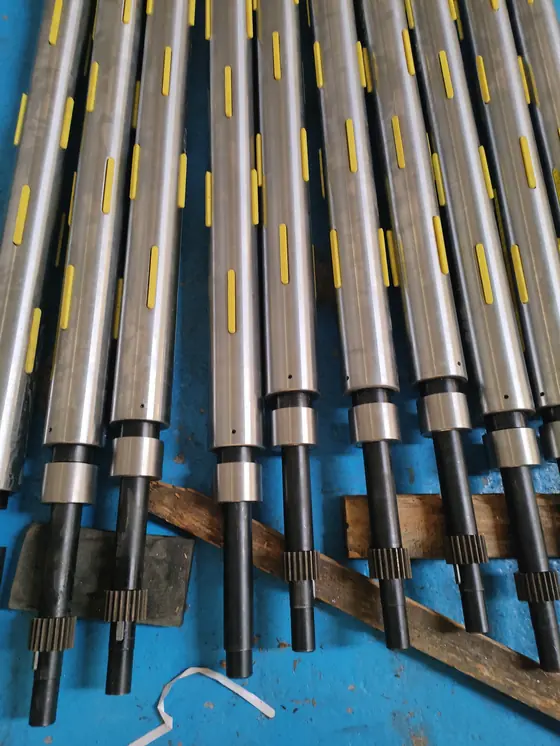
Aluminum or steel air shaft: weight, corrosion, load capacity and cost compared, with typical applications for each material.
The short answer
| Film, paper, nonwovens — handling matters more than load | ALUMINUM |
| Heavy rewind, thick board, high tension | STEEL |
| Humid workshop, rust is a problem | ALUMINUM |
| Existing steel shafts, weight is not an issue | STEEL |
Side by side
Typical values — final specification depends on the drawing
| Tube | 6063 aluminum / seamless steel |
|---|---|
| Surface | Hard anodized / hard chrome |
| Weight | Lower / higher |
| Corrosion | No rust / requires coating |
| Load at 2 m (test) | Approx. 500 kg / 1,500 kg — method on request |
| Best for | Film, paper, nonwovens / heavy rewind, board |
Do not over-specify
Steel is not automatically better. A heavier shaft changes handling, bearing load and changeover time. If the line runs film or light paper, aluminum is usually the right call; if it runs heavy rewind at high tension, steel earns its weight.
If you are unsure, send the web width, material and tension — we will size the shaft and recommend the tube.
FAQ
Is steel stronger?
It carries more load for the same diameter, but it is heavier and needs coating to resist rust.
Can I mix materials on one machine?
Yes, as long as the shaft ends and diameters match; we confirm per position.
Do you supply both?
Yes, both tubes are made in the same workshop to the same drawing.
Send a drawing. Get a real answer.
An engineer-reviewed quote within 24 hours, with tolerances, lead time and packing details included.